After 350 kilometers, I was seriously thinking about quitting the Tour Gravel Vosgien.
It was hot. I was tired. I missed my family. And honestly, I kept asking myself the worst question you can ask during an ultra race:
Why am I even doing this?
Four days later, I reached the finish after 1200 kilometers, 20,000 meters of climbing, roughly 40,000 calories burned, and almost no real sleep. I finished in 4th place, just a little more than ten minutes behind 3rd.
This is my honest race recap.
Not the polished version. The real one.
Heat, doubts, bakeries, tire mistakes, hotel beds, short power naps, sandy gravel, a river crossing near the finish, and one sunset on the Grand Ballon that I will not forget.
Watch the video and see the full packing list
The video version of this recap is embedded above.
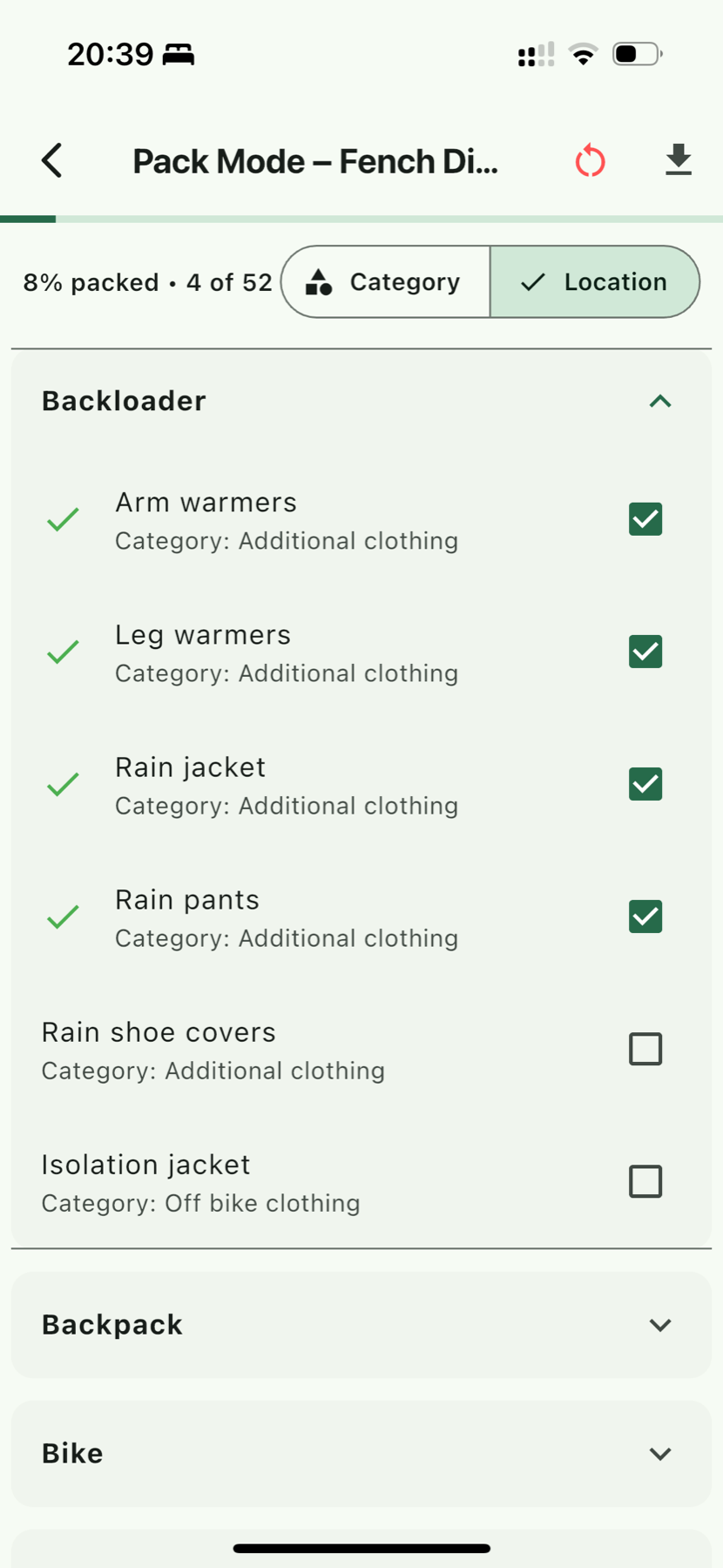
You can also open my complete TGV 2026 packing list here:
Tour Gravel Vosgien 2026 packing list
What is the Tour Gravel Vosgien?
The Tour Gravel Vosgien is not a relaxed gravel holiday.
It is a long-distance gravel race through the Vosges with:
- around 1200 km
- around 20,000 meters of climbing
- a mix of gravel, trails, road, and forest tracks
- long stretches with limited infrastructure
- heat, loneliness, sleep pressure, and many small decisions that slowly become big ones
For me, it was also the final race of my bikepacking season.
After the Italy Divide, I wanted to know one thing:
How much is still there?
Could I not only finish another big race, but actually race it?
That question stayed with me for the whole route.
Day 1: The start, Petit Ballon, heat, and the first mental crack
The start was at 6:00 in the morning.
I had slept surprisingly well on the parking lot, eaten my muesli, packed everything back onto the bike, and then suddenly the race was on.
The first kilometers were flat, but the group was already pushing around 300 watts. Everyone was nervous. Everyone was excited. Everyone wanted position.
And at the same time I knew:
If you go too deep here, you pay later.
The first big climb toward Petit Ballon was beautiful. The kind of climb where you are still fresh enough to enjoy the view and pretend everything is under control.
Looking back, though, we probably rode it a little too hard.
After that came vineyards, small villages, hike-a-bike sections, and the first checkpoint in Ribeauville. The race still felt alive and social.
Then the heat arrived.
After CP1, toward the Rhine, the gravel became flatter, more repetitive, and brutally warm. Even with ice cream stops, drinking, and cooling down whenever possible, we suffered.
Then we heard that Joost had abandoned because of overheating. Sebastian was struggling too.
That was the moment when it became clear:
This race would not be decided only by legs.
In the evening, I hit my first real low point.
Normally sunset is one of my favorite moments in a bikepacking race. The light changes, the heat drops, and the whole day starts to feel meaningful.
But this time it hit differently.
I missed my family badly. I was mentally not fully there. I was tired in a way that did not feel productive anymore. And I seriously thought about stopping in Saverne and going home.
Later we found a shelter for the night, which should have been perfect.
Until I woke up to grunting and squealing outside my tent.
A group of wild boars was moving around nearby. I slept badly, listened too much, and tried to convince myself that this was still a good hobby.
Day 1 was survived.
Not mastered.
Survived.
Day 2: Bakery, coffee, and the comeback in my head
Day 2 started with exactly what you sometimes need in an ultra race:
A perfect bakery.
Sugar. Sandwiches. Coffee.
It sounds banal, but it changed everything.
Suddenly the desire to race came back. Sebastian was completely right with one of the most important ultra-racing rules:
Never decide to quit in the evening.
Sleep first. Eat first. Drink coffee. Then decide.
In Saverne we reached the checkpoint. After that I continued with Stef and Ewout, two really cool Dutch riders. Toward Wissembourg we made good progress, including another ice cream stop, because apparently that was now part of the race strategy.
The route that day was not always spectacular, but my head was back in the race.
That mattered more than the scenery.
In the evening we had pasta, a shower, and a hotel bed.
And honestly, in a race like this, a simple bed can feel like absolute luxury. Not because it is fancy, but because it resets your whole system.
Clean body.
Real sleep.
Less chaos.
The race was not suddenly easy.
But I was back.
Day 3: Wrong tires, sandy gravel, and the Colorado
On the third day, I became more and more aware that my tire choice was not ideal.
I was riding rather narrow tires, and on the amount of off-road terrain, gravel, and sandy ground we had, the bike sometimes felt nervous and sketchy.
There were many singletracks, technical sections, and loose passages.
I missed my Peyote tire badly.
For this terrain, it would probably have been the better choice: wider, grippier, calmer, and mentally easier to trust.
That is something people sometimes underestimate. Tire choice is not only about speed or rolling resistance. It is also about how much confidence you lose every time the bike feels uncertain underneath you.
If you hesitate hundreds of times, it costs energy.
And it costs focus.
The highlight of the day was the Colorado: impressive rock formations in the middle of nowhere. One of those places where you briefly forget that you are racing and simply look around.
We were not covering kilometers extremely quickly, but the race kept moving.
In the evening, we reached Saverne again and I stocked up completely for the night and the next morning:
- donuts
- sandwiches
- gummy bears
- protein drinks
- anything that looked like calories
After that I said goodbye to Stef and Ewout and rode another 40 kilometers alone.
The night became adventurous.
There was a narrow tunnel under the Rhine that was hard to find, tricky route finding, and a lot of off-road riding along canals in the dark.
At around 23:00, I reached a B&B.
Shower.
Bed.
Done.
Day 4: Donon, lakes, 35 degrees, and a sad place
The alarm went off at 5:00.
The route went toward Donon Temple. At the beginning I did not really find my rhythm, but after the first summit there was another bakery.
Again, sugar helped.
I met Ludo again, who we had already seen in Wissembourg. He was also fighting heat and sleep deprivation.
But I could feel that my race was coming back together.
So I continued.
Then came one of the most beautiful sections of the whole race: technical trails through a lake landscape.
Just wow.
These are the moments that explain why we do this, even when the previous night made no sense at all.
Later in Schirmeck, the heat hit brutally again.
It was around 35 degrees, followed by a very steep climb with about 600 meters of elevation gain on gravel.
On the way, the route passed a former concentration camp. That was a hard and sad contrast to the narrow sporting tunnel you often enter during a race.
For a moment, everything became quiet in a different way.
After that, the area became wild, remote, and thin on infrastructure. I was already preparing myself mentally for another night in the tent.
But around 20:00, I found a B&B.
Natalie, the host, was incredibly kind and still made me a small dinner.
At 21:00, my eyes were closed.
That was not weakness.
That was recovery.
Day 5: Final push over Grand Ballon to the finish
At 2:00 in the morning, it was wake-up time.
The final day.
The finish was in Ensisheim, but there were still countless passes and more than 6000 meters of climbing ahead: La Super Blanche de Belle Fils, Le Grand Ballon, and many more.
The heat became difficult again.
I took regular short breaks of two or three minutes. Sometimes I used them as tiny power naps. Around lunch, I had pasta bolognese.
In an ultra race, a warm meal can be a reset button.
Many kilometers that day were on paved roads. That was mentally hard in its own way, but it also meant that progress was relatively fast despite all the climbing.
I noticed that I was gaining positions.
More importantly, I could still push power.
No complete collapse.
No total explosion.
Even after the heat, the sleep deprivation, the kilometers, and the climbing, I could still put pressure on the pedals.
That meant a lot to me.
The big highlight was the Route des Cretes toward Grand Ballon.
I knew the finish was not far anymore.
My plan was working.
I had made it to this point.
And then came the light.
The sunset, the atmosphere, the feeling of being high up in the Vosges after everything that had happened before.
That was pure goosebumps.
After Grand Ballon, the route dropped quickly and then followed the bike path toward Ensisheim.
Just before the finish, there was even a river crossing.
Wet feet near the end.
Somehow perfect for this race.
Then the finish.
4th place.
After 1200 kilometers, 20,000 meters of climbing, 4 days, 15 hours and 40 minutes.
3rd place was just a little more than ten minutes ahead.
That is brutally close.
But I am very happy with the result.
What I learned
My biggest learning is simple:
Never make the quit decision in the lowest moment.
Not in the evening.
Not in the heat.
Not when you are hungry.
Sleep, sugar, coffee, and a little time can completely change the world.
The second learning:
Material matters.
I was strong in this race, but my tire choice definitely cost me time and confidence on some sections. For this much off-road, sand, and singletrack, I should have chosen something wider and grippier.
The third learning:
I can still produce power at the end of a race like this.
That almost mattered more to me than the placing. I did not fall apart completely. I could keep riding, keep thinking, and keep racing until the finish.
And in the end, what remains most is gratitude.
For the race.
For the people on the route.
For Sebastian, Stef, Ewout, Ludo, and all the small bakeries, ice cream stops, B&Bs, and helpful strangers.
And for Pascal and the whole team.
The event was beautifully organized, the route was hard and memorable, and the people made it special.
For me, it was a perfect end to the bikepacking race season.
Full packing list
You can see exactly what I carried for this race here:
Open my Tour Gravel Vosgien 2026 packing list
The list includes the bike setup, bags, sleep system, clothing, repair kit, electronics, and the small things that can make or break a long race.
Related links
My packing list app: bike-packing.app
Tour Gravel Vosgien 2026 packing list