This is not about weight. It is about efficiency.
I’m racing the Italy Divide this year:
- 1200 km
- 20,000+ meters of climbing
- mixed terrain
- very little room for wasted time or bad decisions
After last year, one thing became obvious:
I didn’t lose most of my time because I was too slow. I lost it because my setup was inefficient.
So this year I rebuilt the whole system around one principle:
everything I carry has to help me move, recover, navigate, or fix problems fast.
1. My weapon of choice: drop bar MTB fully
This is probably the most controversial part of the setup:
a drop bar full suspension MTB.
For this race, though, it makes a lot of sense.
Why:
- full suspension saves energy over long rough sectors
- multiple hand positions matter over very long days
- lockout on the bar keeps climbing efficient
- the bike still feels fast enough when terrain opens up
On races like the Italy Divide, hands, neck, shoulders, and lower back become just as important as your legs. That is one big reason I prefer this platform.
Gearing
I’m running a setup that stays practical rather than extreme.
The goal is simple:
- low enough for steep loaded climbs
- fast enough for long rolling sections
- no hero gearing, no unnecessary compromises
2. Lean overnight strategy: no tent, no sleeping bag
This is where my setup gets very intentional.
I’m not carrying:
- a tent
- a bivy
- a sleeping bag
What I do carry:
- an emergency blanket
- an insulation jacket
- rain gear
- enough extra clothing to stay functional if things go sideways
My plan is to sleep indoors whenever it makes sense and keep sleep quality high instead of trying to survive long cold stops outside.
That sounds less adventurous, but for racing it is simply more efficient.
Five hours of real sleep in a bed can be worth much more than a longer but low-quality stop outside.
3. Clothing: just enough range for big conditions
The Italy Divide can be hot, wet, cold, and windy within the same race.
So my clothing setup is not huge, but it covers the important range:
- gilet
- arm warmers
- leg warmers
- rain jacket
- rain pants
- overshoes
- buff
- warm gloves
Off the bike I keep it minimal as well, with an insulation jacket and simple extra layers instead of a full comfort setup.
Again, the point is not to be prepared for every imaginary scenario. The point is to stay moving and to recover well enough to keep making good decisions.
4. Lighting and power: simple, reliable, no dynamo
I’m not running a hub dynamo.
Instead, I’m going with a battery-based system built around the Lupine Blika, plus backup lights and spare power.
That gives me:
- strong light when trail conditions get technical
- less system complexity
- straightforward charging during stops
My power strategy is based on:
- the main light
- a spare Lupine battery
- a power bank in easy reach
- an extra backup power bank
- small backup lights
For me, that is the better tradeoff than adding more hardware to the bike.
5. Navigation: Garmin for route, phone for real life
Garmin is excellent for staying on route.
But in actual race situations, the smartphone often matters more for:
- hotels
- opening hours
- rerouting
- quick decisions in towns
- communication
That is why I think the Garmin-plus-phone combination is underrated.
One device keeps me on track. The other helps me deal with reality.
6. Repair kit: boring, compact, absolutely necessary
Minimal does not mean naive.
My repair kit is one of the most important parts of the whole setup. I’m carrying the usual essentials, including:
- tool kit
- tyre levers
- tube repair
- pump
- sealant
- CO2
- two spare tubes
- tape
- cable ties
- lube and rag
I’d much rather carry a compact repair system than lose hours because of one stupid mechanical.
7. The small things that stop races from falling apart
A few items are easy to overlook, but they matter:
- water filter
- first aid basics
- toilet paper and wipes
- contact lenses
- lock
- whistle
- ID, cash, and cards
None of these are exciting. All of them can save time, stress, or bad decisions.
That is the kind of gear I care about now.
Full packing list
The full shared list is here:
Why I built my own packing app
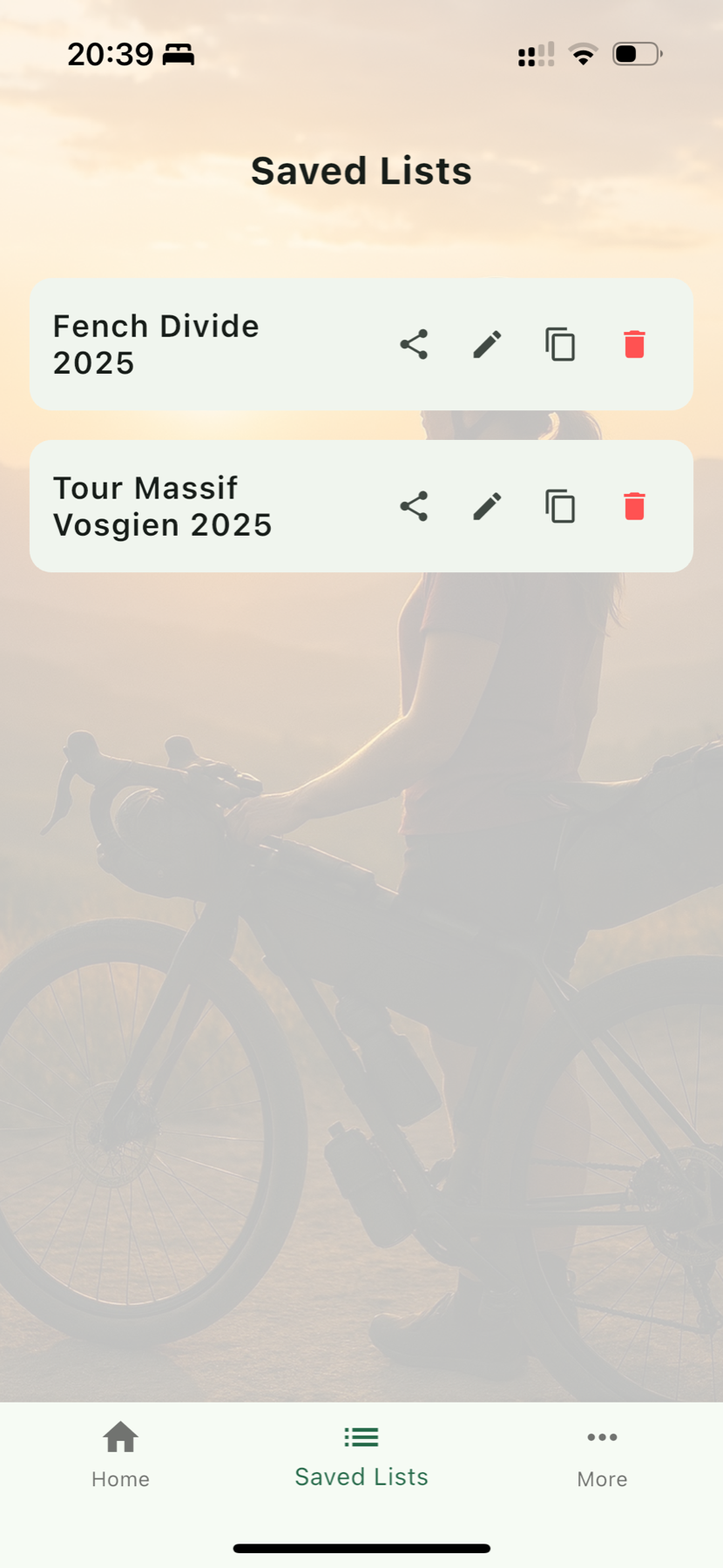
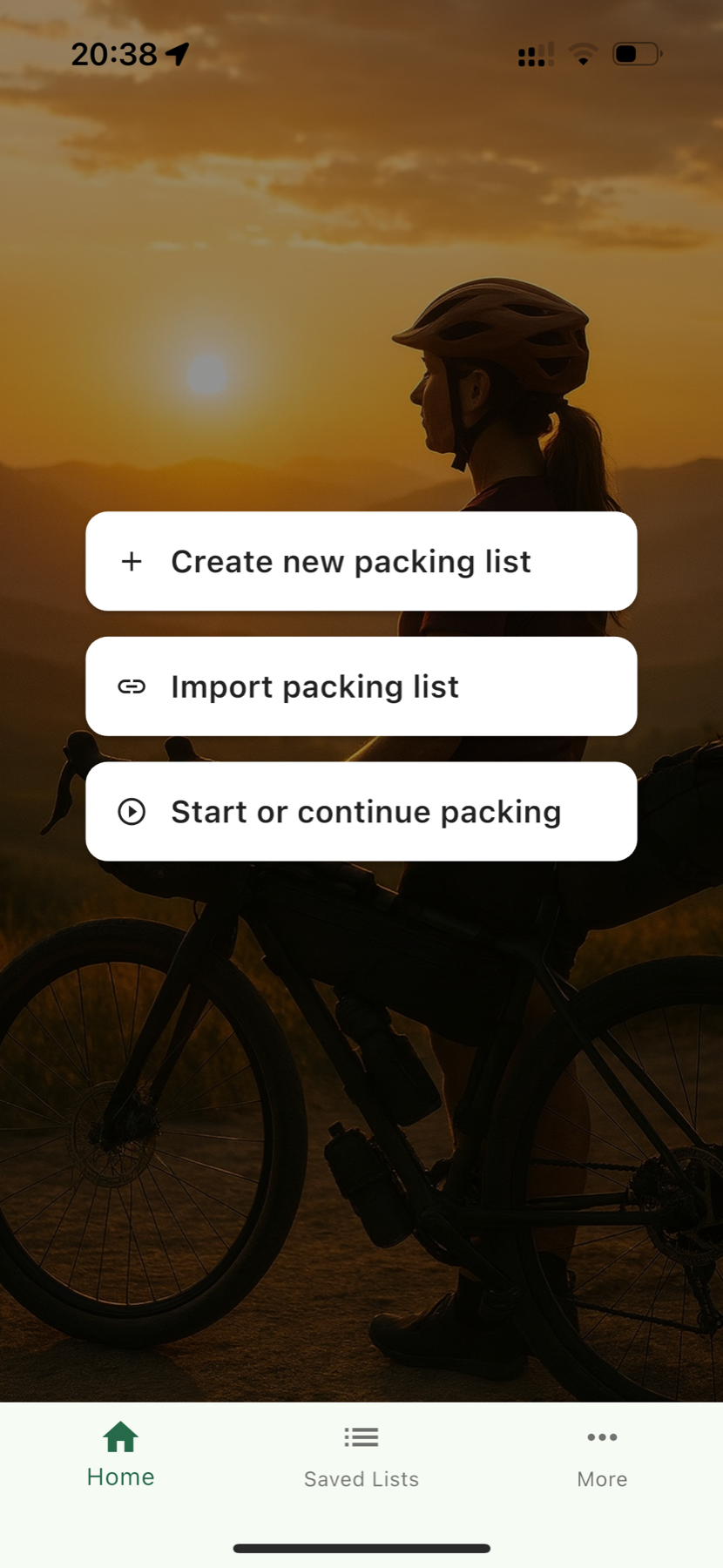
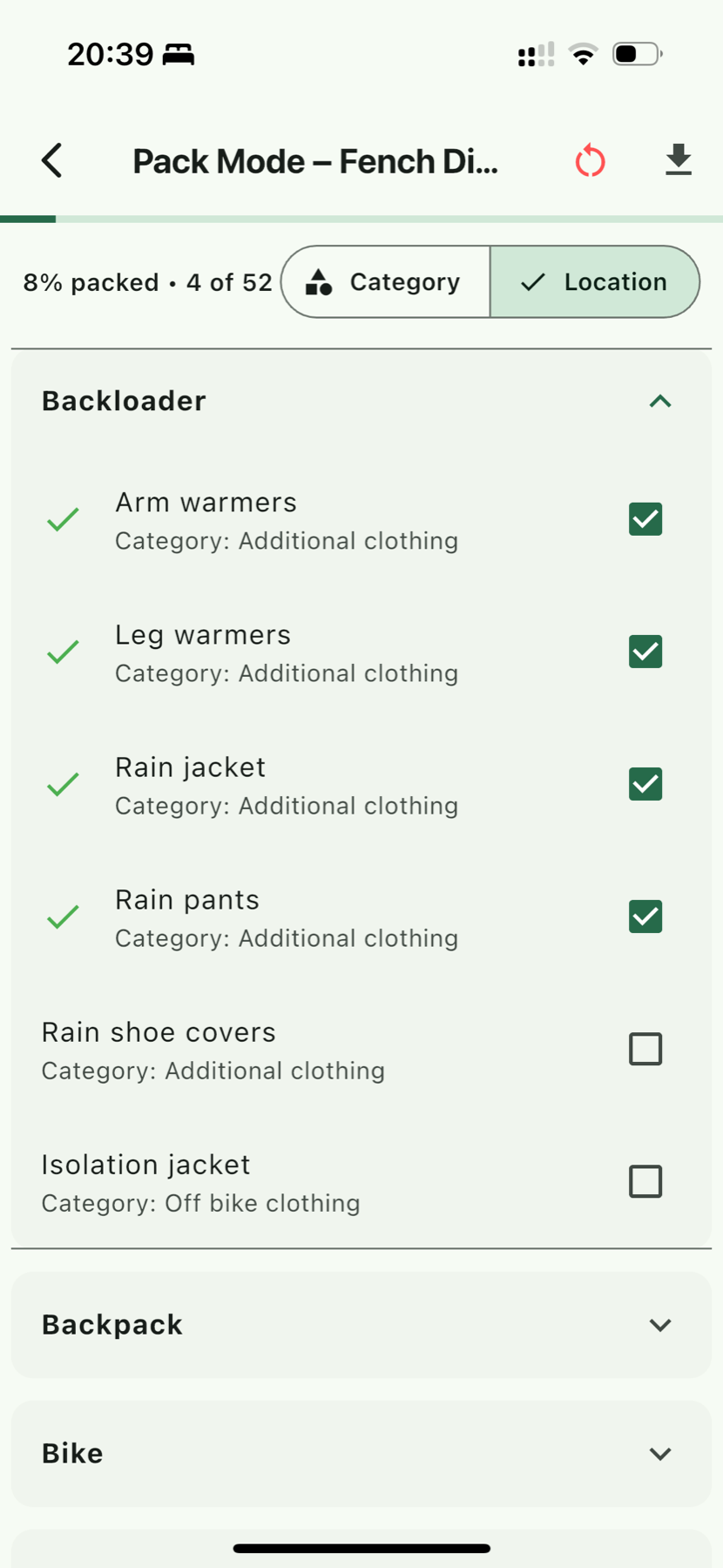
One reason this setup is clearer than last year is that I now manage everything in my own app.
I built bike-packing.app because I wanted something simple:
- create a real setup
- track where items are packed
- reuse checklists
- share setups with other riders
No clutter. No overbuilt planning workflow. Just a practical system that helps before a trip and during packing.
Final thoughts
This is not a perfect setup.
It is a setup designed to reduce friction.
Not more gear. Not more comfort. Not more theory.
Just fewer bad decisions, less wasted time, and a better chance of staying efficient when the race gets hard.
That is what matters to me for the Italy Divide this year.
Related links
👉 My packing list app: bike-packing.app
👉 My Italy Divide packlist: Italy Divide 2026 packlist
👉 About this project: About bike-packing.app
👉 Contact me for support: support@bike-packing.app